

Different businesses have different ways of costing; some would use the single rate, others the multiple rates, while the rest Online Accounting may make use of activity-based costing. A Predetermined Overhead rate shall be used to calculate an estimate on the projects that are yet to commence for overhead costs. It would involve calculating a known cost (like Labor cost) and then applying an overhead rate (which was predetermined) to this to project an unknown cost (which is the overhead amount). The formula for calculating Predetermined Overhead Rate is represented as follows. Now, let’s look at some hypothetical business models to see actual use-cases for predetermined overhead rates.

Production Volume
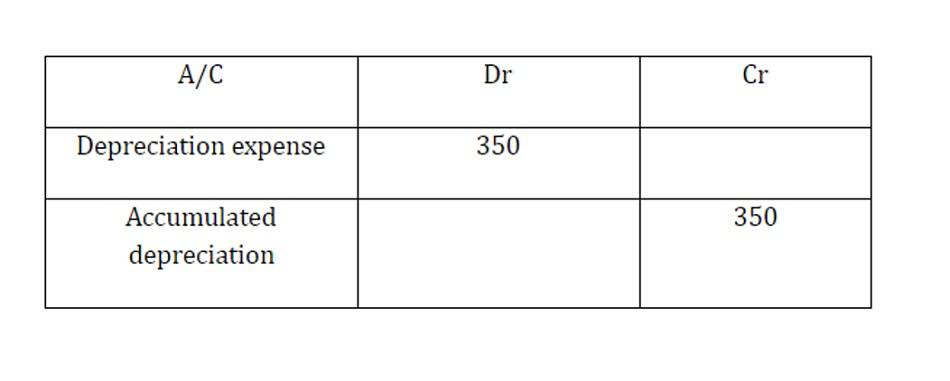
Every accounting period, a standard amount of overhead is estimated and applied to goods that have been produced. While tracking the cost of goods sold is important for determining actual production costs, to earn a profit, you’ll need to set prices that consider all expenses. Your income statement can also help you identify all overhead or indirect costs. This option is best if you’re just starting out and don’t have any historical data to work with. If the actual overhead at the end of the accounting period is 1,575 the overhead is said to be under applied by 125 (1,450 – 1,575). If the actual overhead at the end of Budgeting for Nonprofits the accounting period is 1,575 the overhead is said to be over applied by 25 (1,600 – 1,575).

Predetermined Overhead Rate Calculation (Step by Step)

Therefore, they use labor hours for the apportionment of their manufacturing cost. Before the beginning of any accounting year, it is determined to estimate the level of activity and the amount of overhead required to allocate the same. At a later stage, when the actual expenses are known, the difference between that allocated overhead and the actual expense is adjusted.
- You’ll master the key formulas, learn how to allocate costs properly across departments, see real-world examples, and discover best practices to control overhead expenses.
- This rate would then charge $4 of overhead to production for every direct labor hour worked.
- It’s important to note that this is an estimated rate, and actual overhead costs and the actual activity base can be different from the estimated figures.
- It is equal to the estimate overhead divided by the estimate production quantity.
- The cost of these items is not dependent upon the total number of units produced by the company.
- A predetermined overhead rate is defined as the ratio of manufacturing overhead costs to the total units of allocation.
Step 2: Determine the Estimated Activity Level
- Typical operating expenses like rent and utilities are considered overhead costs.
- Also, profits will be affected when sales and production decisions are based on an inaccurate overhead rate.
- Assume that management estimates that the labor costs for the next accounting period will be $100,000 and the total overhead costs will be $150,000.
- This predetermined overhead rate can also be used to help the marketing agency estimate its margin on a project.
- The overhead used in the allocation is an estimate due to the timing considerations already discussed.
Once you have an industry average, you can adjust it to fit your specific business needs. Not a whole lot compared to other business models (which is probably why a lot of people choose to start these sorts of businesses!). Anytime you can make the future less uncertain, you’ll be more successful in your business. My Accounting Course is a world-class educational resource developed by experts to simplify accounting, finance, & investment analysis topics, so students and professionals can learn and propel their careers. Shaun Conrad is a Certified Public Accountant and CPA exam expert with a passion for teaching. After almost a decade of experience in public accounting, he created MyAccountingCourse.com to help people learn accounting & finance, pass the CPA exam, and start their career.

Profitability
By using a predetermined rate, a business can consistently allocate overhead costs to individual jobs and make informed decisions about pricing, production processes, and resource utilization. Suppose a business uses direct labor hours as the activity base for calculating the pre-determined rate. Overhead rates refer to the allocation of indirect costs to the production of goods or services. They represent a percentage or rate that is applied to an appropriate cost driver, such as labor hours or machine hours, to assign overhead costs to products. The production manager has told us that the manufacturing overhead will be $ 500,000 for the whole year and the company expected to spend 20,000 hours on direct labor.
Determining Estimated Overhead Cost
- Starting a nonprofit can be a fulfilling way to make a difference in the community, but it requires careful planning and consideration.
- Of course, management also has to price the product to cover the direct costs involved in the production, including direct labor, electricity, and raw materials.
- For example, if you add a new production facility, experience dramatic changes in utility costs, or significantly change your production methods, it makes sense to revisit your overhead rate.
- At the end of the year, the amount of overhead estimated and applied should be close, although it is rare for the applied amount to exactly equal the actual overhead.
- This method helps in maintaining accurate and up-to-date cost information, which is essential for setting product prices, controlling costs, and analyzing profitability.
No matter how well-run a manufacturing company is or how good its estimations are, applied overhead is still an estimation. At the end of the year or accounting period, the applied overhead will likely not conform precisely with the actual amount of overhead costs. When estimating overhead costs, make sure predetermined overhead rate formula to account for all relevant expenses in order to obtain an accurate predetermined overhead rate. At a manufacturing firm, an inaccurate predetermined overhead rate led to overpricing of products, resulting in reduced sales. However, after recalculating the rate and adjusting pricing, sales improved, and profitability increased.